Matthew 7:6
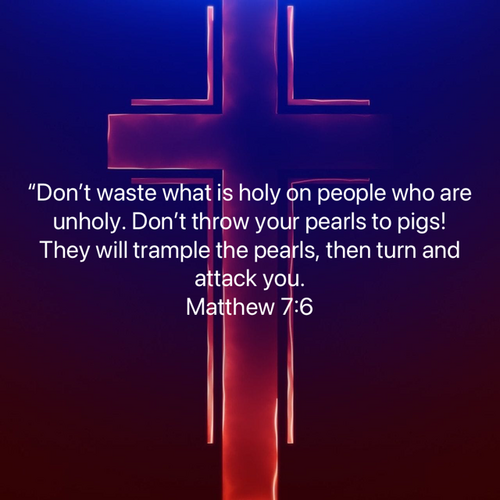
This is a difficult verse to understand and balance, given our mandate to make disciples of all nations. How do we determine who is “unholy”? We must be willing to share with everyone, yet we must also exercise discernment regarding whom we engage more deeply.
I am reminded of two passages in Proverbs. One of them makes immediate sense in light of Jesus’ teaching. In Proverbs 9:7–8, Solomon explains that correcting a mocker often results in insult or hostility, while correcting a wise person results in appreciation and growth. The principle seems clear: some hearts are receptive, and others are resistant.
Then there is Proverbs 26:4–5, which at first glance appears contradictory. In one verse, we are told not to answer a fool according to his folly, lest we become like him. In the very next verse, we are told to answer a fool, lest he become wise in his own eyes. This tension can make us pause.
I believe what Solomon—and ultimately Jesus—are teaching is that we must be both bold and discerning. We are called to be advocates for truth at all times, yet we must remain aware of our audience. Everyone deserves to hear the truth at least once. However, once it has been clearly and lovingly shared, we are not called to endlessly argue with those who demonstrate no appetite for it. Instead, we pray for them and invest our time in those who are receptive.
The time spent trying to convince someone who is unwilling to listen may take away from someone who is ready to receive. Discernment helps us steward both truth and time wisely.
I am reminded of two passages in Proverbs. One of them makes immediate sense in light of Jesus’ teaching. In Proverbs 9:7–8, Solomon explains that correcting a mocker often results in insult or hostility, while correcting a wise person results in appreciation and growth. The principle seems clear: some hearts are receptive, and others are resistant.
Then there is Proverbs 26:4–5, which at first glance appears contradictory. In one verse, we are told not to answer a fool according to his folly, lest we become like him. In the very next verse, we are told to answer a fool, lest he become wise in his own eyes. This tension can make us pause.
I believe what Solomon—and ultimately Jesus—are teaching is that we must be both bold and discerning. We are called to be advocates for truth at all times, yet we must remain aware of our audience. Everyone deserves to hear the truth at least once. However, once it has been clearly and lovingly shared, we are not called to endlessly argue with those who demonstrate no appetite for it. Instead, we pray for them and invest our time in those who are receptive.
The time spent trying to convince someone who is unwilling to listen may take away from someone who is ready to receive. Discernment helps us steward both truth and time wisely.
Recent
Archive
2026
January
Matthew 4:3-11John 1:32-34John 1:45-51John 2:6-11John 2:13-17John 2:18-25John 3:13-17John 3:18-21John 3:27-32, 36John 4:3-10John 4:11-15John 4:16-21John 4:22-26John 4:27-30John 4:31-38John 4:39-42John 4:46-53Mark 1:21-28Matthew 5:1-6Matthew 5:7-12Matthew 5:13-16Matthew 5:17-20Matthew 5:21-26Matthew 5:27-30Matthew 5:31-32
February
Matthew 5:33-37Matthew 5:38-42Matthew 5:43-48Matthew 6:1-4Matthew 6:5-13Matthew 6:14-18Matthew 6:19-21Matthew 6:22-23Matthew 6:24-30Matthew 6:31-34Matthew 7:1-5Matthew 7:6Matthew 7:7-11Matthew 7:12Matthew 7:13-14Matthew 7:15-20Matthew 7:21-23Matthew 7:24-29Matthew 8:1-4Matthew 8:5-12Matthew 8:14-17Matthew 8:18-22Matthew 8:23-27Matthew 8:28-34
March
Sunday 3-1-26Luke 7:11-17Mark 5:25-34Mark 5:22-42Matthew 10:1-8Matthew 10:38-40Matthew 11:28-30Matthew 12:33-37Matthew 12:46-50Matthew 10:10-13Mark 4:13-20Matthew 13:36-43Matthew 13:44-46Matthew 13:47-52Matthew 13:53-58Matthew 14:14-21Matthew 14:24-33Matthew 14:34-36John 6:29-35Matthew 5:1-9Matthew 15:10-20Matthew 15:21-28Matthew 15:29-31Matthew 15:32-39Matthew 17:14-20Hebrews 10:24-25Matthew 8:1-6Matthew18:18-20
Categories
no categories
No Comments